
Roughly 99% of bites are fear-based — a learned way of making pressure go away — and fear is trainable. Secure your dog so the behavior can’t rehearse, rule out pain with your vet, don’t punish after the fact, and get a professional assessment before you make any big decisions. A bite is serious. It is almost never the end of the story.
If you found this page the night it happened, I want to say something to you before we talk about dogs at all: the fact that you’re reading instead of panicking puts you ahead of most people. You’re going to be okay. In most cases, your dog is going to be okay too.
I’ve spent over two decades specializing in the dogs other trainers won’t take — the bite cases, the aggression cases, the dogs whose owners were told there was no hope. Families travel their dogs to our facility in Middle Tennessee from all over the country for exactly the situation you’re in right now. So let me walk you through this the same way I would if we were sitting at your kitchen table.
First, the number that should change how you feel
In my experience across well over a thousand aggression cases: ninety-nine times out of a hundred, a bite is fear aggression. Not dominance. Not a “vicious dog.” Not a switch that flipped and can never be unflipped. Fear.
Here’s the mechanism, because once you see it you can’t unsee it. Something put pressure on your dog — a stranger reaching over their head, a hand coming toward their collar, a person stepping into space they weren’t comfortable sharing. The dog had no way to make that pressure stop. So they tried the one tool that nature gave them, and it worked instantly. The person pulled back. The pressure vanished.
Your dog didn’t learn “I am dangerous” that day. Your dog learned “aggression makes scary things go away.” That’s not a character flaw. That’s a learned solution — and learned solutions can be replaced with better ones. That’s the entire job.
This is also why bites tend to escalate if nothing changes. Every time the display “works,” the dog gets more confident in it. A dog that started out fearful can end up looking bold and forward — charging first, asking questions never. Trainers call this fear that grew a costume. Underneath, it’s still the same insecure dog who needs the same thing: someone to take the job of handling pressure off their shoulders.
What to do in the first 48 hours
Okay. Practical steps, in order.
- Make rehearsal impossible. Crate, leash, closed doors, no visitors for now. This isn’t punishment — it’s the same reason you’d take the car keys from someone who just crashed while we figure out what happened. Every repeat of the behavior carves the pathway deeper. Manage first, train second.
- See to the person, and know your local requirements. Make sure the person gets the care they need. Depending on where you live there may be reporting requirements for bites that break skin — your veterinarian or local animal control can tell you exactly what applies. Handle it straight. It matters later that you did.
- Call your vet. Sudden aggression in a dog that never showed it before — especially an older dog — can have a medical cause. Pain makes honest dogs bite. Rule it out before you assume it’s behavioral.
- Do not punish after the fact. Ten minutes later, your dog cannot connect your anger to the bite. All that “showing them it was wrong” teaches is that you’ve become unpredictable — which adds fear to a dog that bit because of fear. You’d be pouring gasoline on the exact fire you’re trying to put out.
- Don’t re-test. The urge to “see if he’s okay with people now” — walking your dog up to a friend to check — is how second bites happen. One incident is a data point. Two is a pattern with a lawyer attached. There is nothing to test yet.
- Write down what actually happened. Not “he attacked out of nowhere” — bites almost never come from nowhere. Who was there, what they were doing, where the dog was, what the dog did in the ten seconds before. That trigger map is the most valuable thing you can hand a professional.
“Is my dog going to be put down?”
This is the question under every other question, so let’s face it directly.
The cases where I believe euthanasia is the responsible answer are the true predatory-aggression-toward-humans cases — where a dog genuinely views a human being as prey. In twenty-plus years and thousands of aggression cases, I have seen a handful. Four, maybe five. They are unmistakable, they are genetic, and they are vanishingly rare.
Your dog — the one who snapped at a guest, bit the neighbor reaching over the fence, got a delivery driver’s forearm at the door — is overwhelmingly likely to be in the other category: a frightened dog running a learned strategy. Those dogs are rehab candidates. I’ve built a career on them.
What that rehabilitation requires is honesty, structure, and a professional who has done it before. What it does not require is giving up on the dog because one moment convinced you they’re something they’re not.
What real rehabilitation looks like
I’ll give you the shape of it, because you should know what you’re evaluating when you talk to any trainer — including us.
It starts with leadership, not with the bite. A dog resorts to aggression when they believe nobody else is going to handle the pressure. So the first thing we rebuild is the relationship math: trust, rapport, respect, and — the one almost every owner is missing — advocacy. Your dog has to learn, through hundreds of small proofs, that when something makes them uncomfortable, you handle it. Every time you step in and manage the situation, you take one brick off their back.
Then real obedience, because you can’t redirect what you can’t direct. A rock-solid down or place isn’t about manners. It’s the handle that lets us give the dog a right answer in the exact moments they used to answer with their teeth.
Then we change how the dog feels about the trigger — not just what they do about it. Careful, distance-based work where the scary thing starts predicting calm and paychecks instead of pressure. Anyone can suppress a behavior with enough force; it comes back the day the enforcement isn’t there. Changing the emotion underneath is what holds. That’s the heart of how we train, and it’s why we’re straight with people that this is neither a two-week fix nor a treats-only conversation.
If you want to see what that looks like when it’s real — not a stock photo, not a promise — watch the story of Warren on our behavior modification page. A dog with a bite on his record, a family who refused to give up on him, and what happened next, in their own words.
When to bring in a professional
If the bite broke skin, if there are children in the home, or if this is the second incident — this is not a DIY project. Not because you’re not capable, but because the cost of getting it wrong is too high, and because a dog with a bite history deserves an assessment by someone who has seen a thousand of these and can tell you honestly which kind yours is.
That assessment is exactly what our consultation is. Fifteen minutes on the phone with me first — a real conversation, not a sales pitch. If we’re a fit, we assess your dog in person at the facility in Hartsville, fifty minutes east of Nashville. Families come to us from across Middle Tennessee and travel in from well beyond it. If we’re not the right answer for your case, I’ll tell you that too.
One moment doesn’t define your dog. What you do next is what defines the next ten years. You’ve already started.
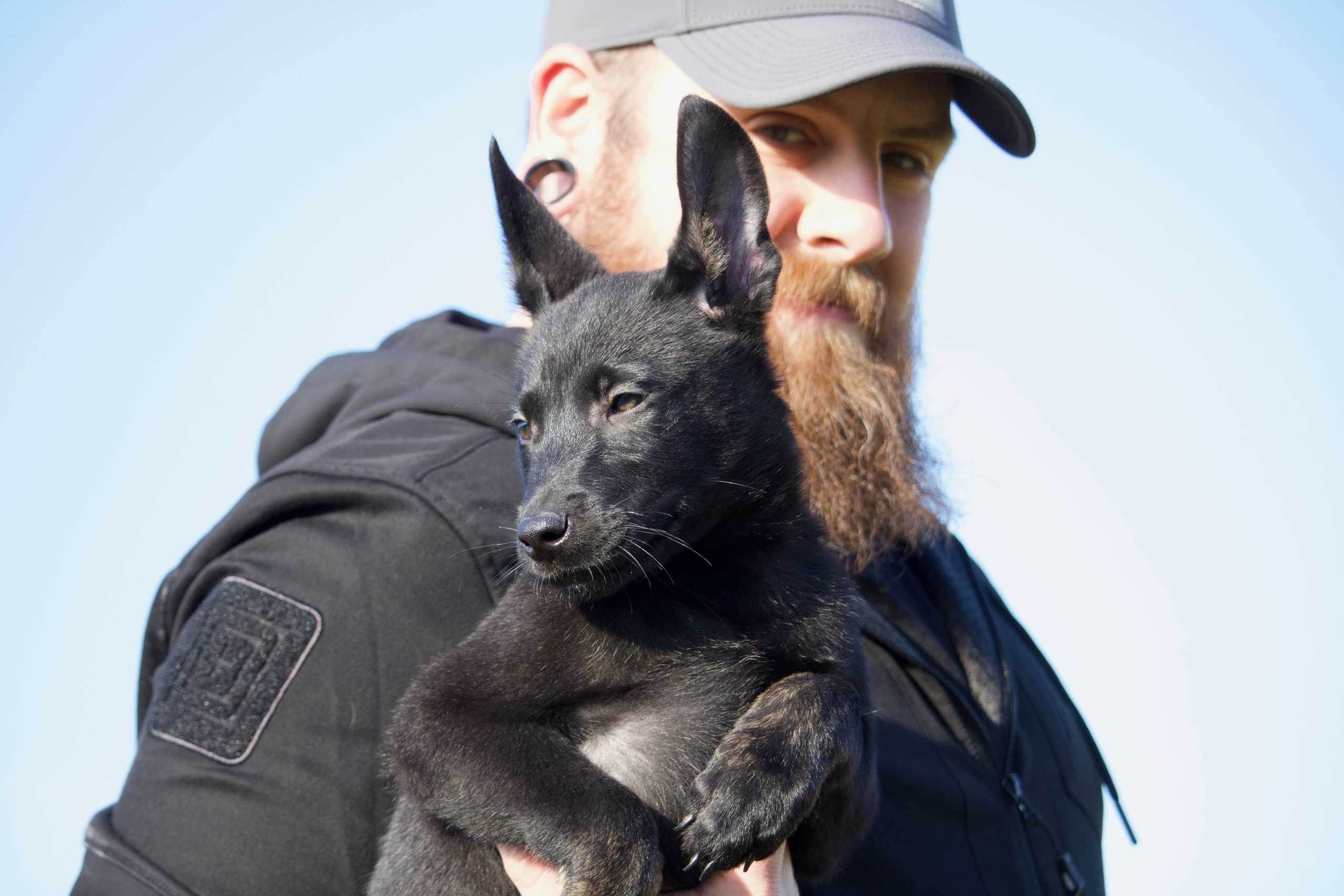
Brian Ferguson
Founder of Agoge K9 and a behavioral rehabilitation specialist with 23+ years and thousands of cases — including the national referrals other trainers turn away. He trains from a 20-acre facility in Hartsville, Tennessee. About Brian →