
Reactivity is an emotional explosion, not defiance — driven by fear, overstimulation, prey drive, or social dominance. Frustration is the engine, and for a lot of dogs the dog park built it. The fix is a two-step protocol: teach behaviors that are incompatible with reacting, then change how the dog feels about the trigger, one careful distance at a time. The goal isn’t a dog who loves other dogs. It’s a dog to whom other dogs are furniture.
Every week I talk to an owner who’s embarrassed. Their dog is a saint in the living room and a werewolf on the sidewalk, and somewhere along the way they started walking at 5:30 in the morning to avoid other people. If that’s you — I want you to hear two things before anything else.
One: your dog is not giving you the finger. Reactivity is an emotional explosion, not a decision. Asking a mid-explosion dog to “sit” is like asking someone mid-panic-attack to do their taxes. The capacity just isn’t there in that moment.
Two: you didn’t cause this by loving your dog wrong. But there’s a good chance something you were told was helping actually built it. So let’s talk about that first.
The dog park problem nobody warns you about
Here’s the thing that surprises almost everyone. A huge slice of the leash-reactive dogs that come through my facility got that way through over-socialization — dog parks, daycare five days a week, greeting every dog on every walk.
Follow the chain. Group play floods a young dog’s brain with the best chemistry of their week. Other dogs become the single most valuable thing on Earth. Now clip a leash on. Your dog sees another dog, must get there, and physically can’t. That gap between desire and access is frustration — and frustration is the number one producer of reactivity and aggression I see. Full stop.
Here’s the part that should really get your attention: in working-dog training, we deliberately use restrained frustration to build drive in protection dogs. That’s the actual technique. Which means a well-meaning owner running the daycare-and-dog-park circuit is accidentally running a watered-down version of protection-dog training on the family pet. Right? Nobody warned you, because the people selling socialization don’t know it themselves.
Proper socialization was never “meet everything.” It’s neutrality — the dog learns to exist calmly around other dogs, people, and chaos without needing to access any of it. More on that in a minute, because neutrality is also the finish line.
The four kinds of reactive dog
Reactivity gets treated like one thing. It’s four, and the difference matters for how we work:
- Overstimulation-based. The most common alongside fear. Energy climbs — spinning, pulling, orbiting — until it erupts. Tail up, chest out. These are frequently the dog-park graduates.
- Fear-based. Tail tucked, body low, that strung-together bark that never seems to end. The display is a coping attempt: it makes the scary thing keep its distance, or it makes you take the dog and leave. Either way, it worked — so it repeats.
- Prey-based. Squirrels, rabbits, cats, the occasional skateboard. A natural drive. You’ll never delete the desire; you teach the dog to control the impulse.
- Social dominance-based. The rarest, and it runs almost perfectly along sex lines — males at males, females at females. The dog feels personally responsible for sorting out the neighborhood hierarchy.
Different engines, same transmission: the trigger outbids you, the emotion spikes, the explosion follows.
Why the yank-and-yell approach makes it worse
The standard sidewalk response — tighten the leash, jerk it, bark “NO” louder than the dog — fails for two reasons.
First, if your dog doesn’t have a trained alternative behavior, you’re punishing them for the wrong answer without ever having taught a right one. That’s not training; that’s just unfair, and I won’t run a program that way. Second, suppression without emotional change is rented behavior. Push the display down with enough pressure and it holds exactly as long as the pressure does — then it comes back up somewhere else, usually worse. If we only change what the body does and never change what the mind feels, we haven’t fixed anything. We’ve hidden it.
How it actually gets fixed
The structure of real reactivity rehab is almost boringly simple. Two columns.
Column A: build incompatible behaviors. Sit, down, place, heel — trained to genuine reliability in new environments, around normal distractions, but not around the trigger yet. That’s deliberate. A dog cannot hold a proper down and explode at the dog across the street at the same time. The behaviors are the handle we’ll grab later. This is why every serious behavior case at our facility starts with real obedience — not because sit-stay is magic, but because you can’t redirect what you can’t direct.
Column B: change the emotion, one distance at a time. Find the distance where your dog can see the trigger and stay in their own head — for some dogs that’s genuinely 150 yards, and that’s fine. Every calm glance at the trigger gets marked and paid. Then you close the gap in steps: 150 yards, 125, 100, 75, 50, 25, ten, five, fence line. The trigger slowly stops predicting threat and starts predicting a paycheck.
The number one way people blow this: moving too fast. The second: paying the wrong moment. If your dog is holding the down but locked onto the other dog like a missile system — staring, loaded, ready — and you feed them, you just paid the locked-on state of mind. You reward when the mind comes back to you, not just when the butt hits the ground. Anytime you reward a dog, you’re rewarding what the brain is doing, not just the body.
And when a blow-up happens mid-session — because it will — the sequence is: interrupt it, put the dog back to work, wait for the mental shift, then pay. Back up ten yards next rep. No drama, no lecture. Just information, both directions.
What “fixed” looks like
Owners sometimes think the goal is a dog who loves every dog. It isn’t. Love is how half of these dogs got here. The goal is neutrality: your dog walks past another dog the way you walk past a mailbox. Not thrilled, not terrified. It’s just another lamp post.
A neutral dog can go anywhere with you — the greenway on a Saturday, a Franklin patio, the vet lobby — because nothing out there is competing for the steering wheel. That’s the actual finish line, and with a sound protocol and consistent reps, it is a very reachable one. Most reactivity, caught honestly and worked correctly, changes faster than owners believe possible after years of 5:30 AM walks.
If you’re past the point of wanting to DIY it — if the explosions are getting bigger, or there’s a bite in the history, or you’ve tried a trainer or two already — that’s the population we exist for. Our behavior modification work runs on exactly the protocol above, at whatever depth your dog needs, on twenty private acres where we control every variable. It starts with a fifteen-minute phone conversation, not a contract.
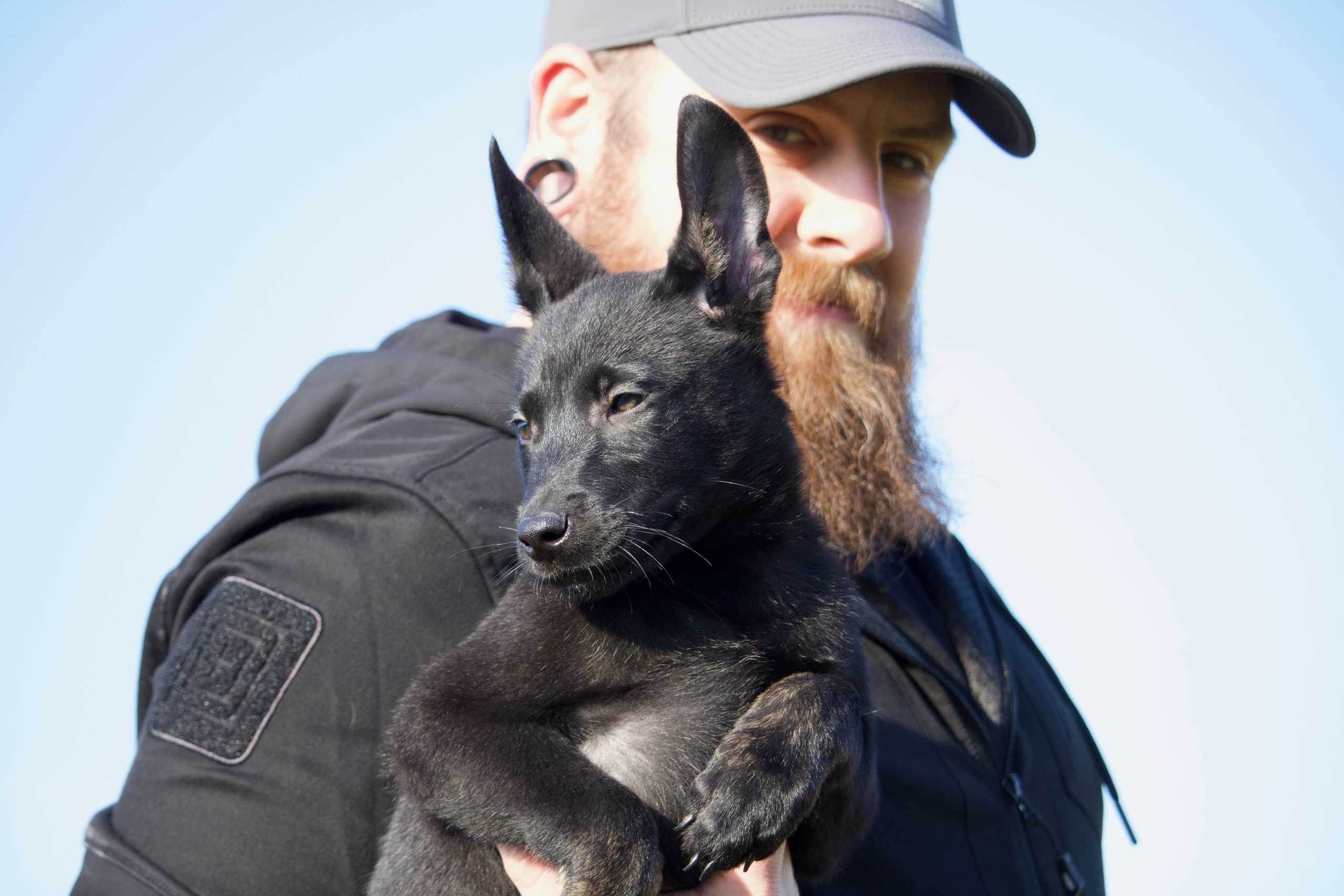
Brian Ferguson
Founder of Agoge K9 and a behavioral rehabilitation specialist with 23+ years and thousands of cases — including the national referrals other trainers turn away. He trains from a 20-acre facility in Hartsville, Tennessee. About Brian →