
Separation anxiety is a dog panicking because they never developed the ability to soothe themselves — the owner became their only source of calm. The fix isn’t more affection, more exercise, or more time together; those are the ingredients of the cause. It’s independence, built while you’re still home: structure, forced separation, neutral departures and reunions, and a crate that removes the panic rehearsal. Expect three to six months of honest work.
The destroyed door frame. The neighbor’s texts about the howling. The video feed you can’t stop watching at work, feeling like the worst person alive. I’ve sat with a lot of owners in exactly that spot, and almost every one of them says the same sentence: “He just loves me so much he can’t handle me leaving.”
I understand why that story feels true. It’s also the story that’s keeping your dog sick. So let me give you the real one, straight, the way I’d give it to you at my kitchen table.
What separation anxiety actually is
Separation anxiety is a chemical dependency on you for soothing. Every time your dog feels uncertain and you stroke them, coo at them, pull them into your lap — their brain gets its dose of the calm chemistry: serotonin, dopamine, the neurochemical sense that everything is okay. Do that enough times, for enough years, and something quietly breaks: the dog never builds the ability to produce that calm on their own. You became the pharmacy.
Then you walk out the door — and the pharmacy leaves with you. What you see on the camera isn’t longing. It’s withdrawal. A nervous system that has no route back to okay, panicking in an empty house.
Here’s the tell that convinced me years ago: separation anxiety doesn’t exist in dog-to-dog relationships. Littermates separate, pack members come and go — no panic, no shredded door frames. If it were natural canine grief, we’d see it between dogs. We don’t. It only shows up on the human side of the relationship, which means the cause lives on the human side of the relationship.
And I’ll say the hard part plainly, because you deserve a trainer who will: this condition is owner-created. Every case I’ve worked in twenty-three years. Not out of cruelty — out of love with no structure around it. You didn’t do it on purpose. But if you built it, you can un-build it, and that should give you real hope.
The three habits that make it worse
Three things I see in nearly every separation-anxiety household:
- The emotional goodbye. “It’s okay, buddy, Mama will be right back, don’t worry, I promise…” You experience that as reassurance. Your dog can’t parse a word of it. What they read is your anxious tone, the drawn-out ritual, the emotional weight — and the association that forms is the door means something bad is happening. You are pouring anxiety onto your dog at the exact moment you want them calm. I don’t say goodbye to my own dogs. Crate, treat, door. It’s a non-event, because I need it to be a non-event.
- The explosive reunion. Same mechanism, other side of the door. If coming home is a fireworks show, then your absence was a very big deal — you just confirmed it. Let the dog out quietly. Calm acknowledgment. Love on them plenty, later, when calm is what you’re rewarding.
- Free run of the house while you’re gone. An anxious dog with the whole house is a dog who has to manage the whole house — every window, every sound, every decision, with nobody to defer to. That’s not freedom. That’s a job they’re unqualified for.
And the quiet fourth: constant togetherness. The dog who “has to be touching you” on the couch, who follows you to the bathroom, who is never more than six feet away. Owners tell me the dog needs that. Respectfully — no. You like that your dog needs that, and you’ve been feeding the dependency because it feels like love. I know that one stings. It stung the people I’ve said it to across the table, too, and their dogs got better when they heard it.
Why the crate solves most of this
Anxiety, at its root, is a dog having to worry about managing the world. So ask the question: what does a dog in a crate have to manage? Nothing. Where to be, what to do, when to relax — all answered. That’s why the crate, used correctly, isn’t confinement. It’s the removal of every decision the dog was failing to cope with.
It also breaks the single most underrated engine of this condition: panic rehearsal. Every lap to the door, every hour of pacing and whining, is a repetition — your dog literally practicing the panic and getting better at it. The crate stops the reps. In my experience, crating during absences solves the bulk of the problem on its own — and it instantly diagnoses the rest, because a fair number of dogs labeled “separation anxiety” turn out to be dogs with too much unsupervised freedom who settle within two weeks of structure. If the panic continues in the crate, now we know we’re working the real thing.
The actual fix: independence, built while you’re home
Here’s the counterintuitive core of the protocol: a dog who can’t be independent while you’re home has zero chance of being calm when you’re gone. So the work happens with you in the room.
- Real obedience first. A place command and a down your dog will actually hold — not living-room-with-a-cookie compliance. Owners tell me “separation anxiety is his only issue.” That’s never how it works; behavior doesn’t exist in a vacuum. The anxiety sits on top of missing foundations, and without the foundation there’s no mechanism to build any of what follows. It’s why obedience is the tool, not the goal in everything we do.
- Forced separation, daily. The dog goes to place or crate while you read, work, watch TV — present, but not interacting. Independence gets practiced like any other skill: in reps, while the safety net is still visible.
- End the shadowing. Room to room, couch to kitchen — the velcro routine is dependency cardio. Send them to place instead.
- Neutral departures, neutral reunions. Boring is the goal. Don’t make absence feel special, and it stops being special.
- Let them solve problems. Training that makes the dog think — figure things out rather than being shown — builds the exact mental muscle that self-soothing runs on. A dog who can work out an answer without you can eventually feel okay without you.
Timeline, honestly: three to six months for real relief. Slower than most behavior work, because the actual test reps — your absences — only happen so many hours a week. Anyone promising you a two-week fix for true separation anxiety is selling you something.
One more thing, and it might be the most important: guilt is the saboteur. If you feel guilty walking out the door, you will do the long goodbye, the big reunion, the extra coddling — and undo weeks of progress in a weekend. Getting your own head right isn’t a side note to this protocol. For a lot of owners, it is the protocol. The kindest thing you will ever do for this dog is stop treating your absence like a tragedy.
When to bring us in
If the panic is dangerous — broken teeth on crate bars, self-injury, escapes out of second-story windows — or if you’ve run an honest protocol for months and the needle won’t move, that’s when a residential program earns its keep. In our board-and-train programs, the foundation gets built here — the obedience, the crate neutrality, the independence reps — each session read and ended by someone who knows what ingrained actually looks like, on a schedule no working household can match — and then we teach you to hold it, because this particular problem is won or lost at your front door. It starts with a fifteen-minute phone call, and I’ll tell you honestly whether your case needs us or just needs the protocol above and some discipline.
Your dog doesn’t need you to be their whole world. They need you to lead the one they live in. There’s a lot more peace in the second one — for both of you.
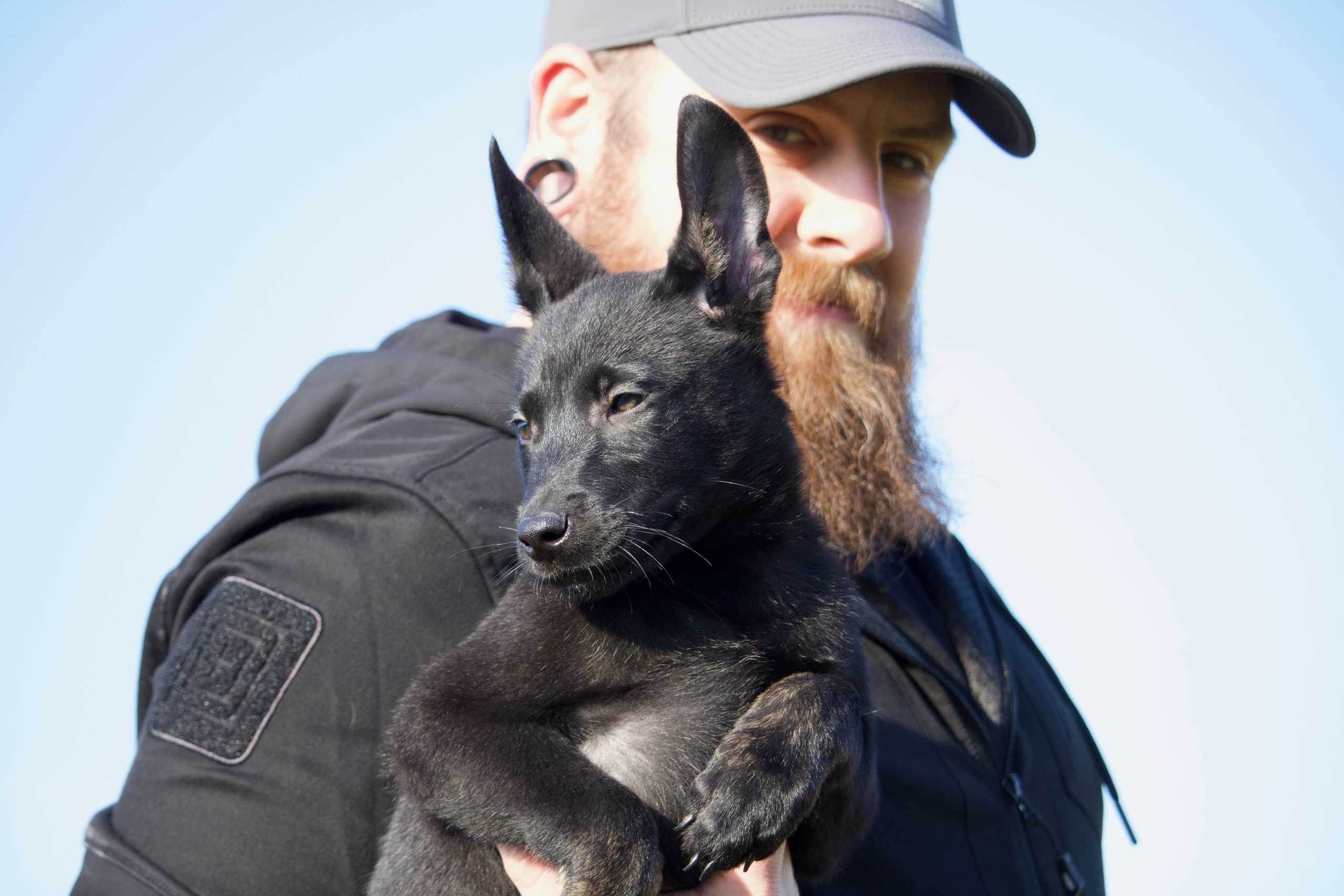
Brian Ferguson
Founder of Agoge K9 and a behavioral rehabilitation specialist with 23+ years and thousands of cases — including the national referrals other trainers turn away. He trains from a 20-acre facility in Hartsville, Tennessee. About Brian →